
Generate electricity from available roof or site space.
RESIDENTIAL SOLAR
Solar designed
around your home.
A residential solar system starts with understanding how your home uses electricity and how the site can support generation.
SOLAR · HOME · ENERGY
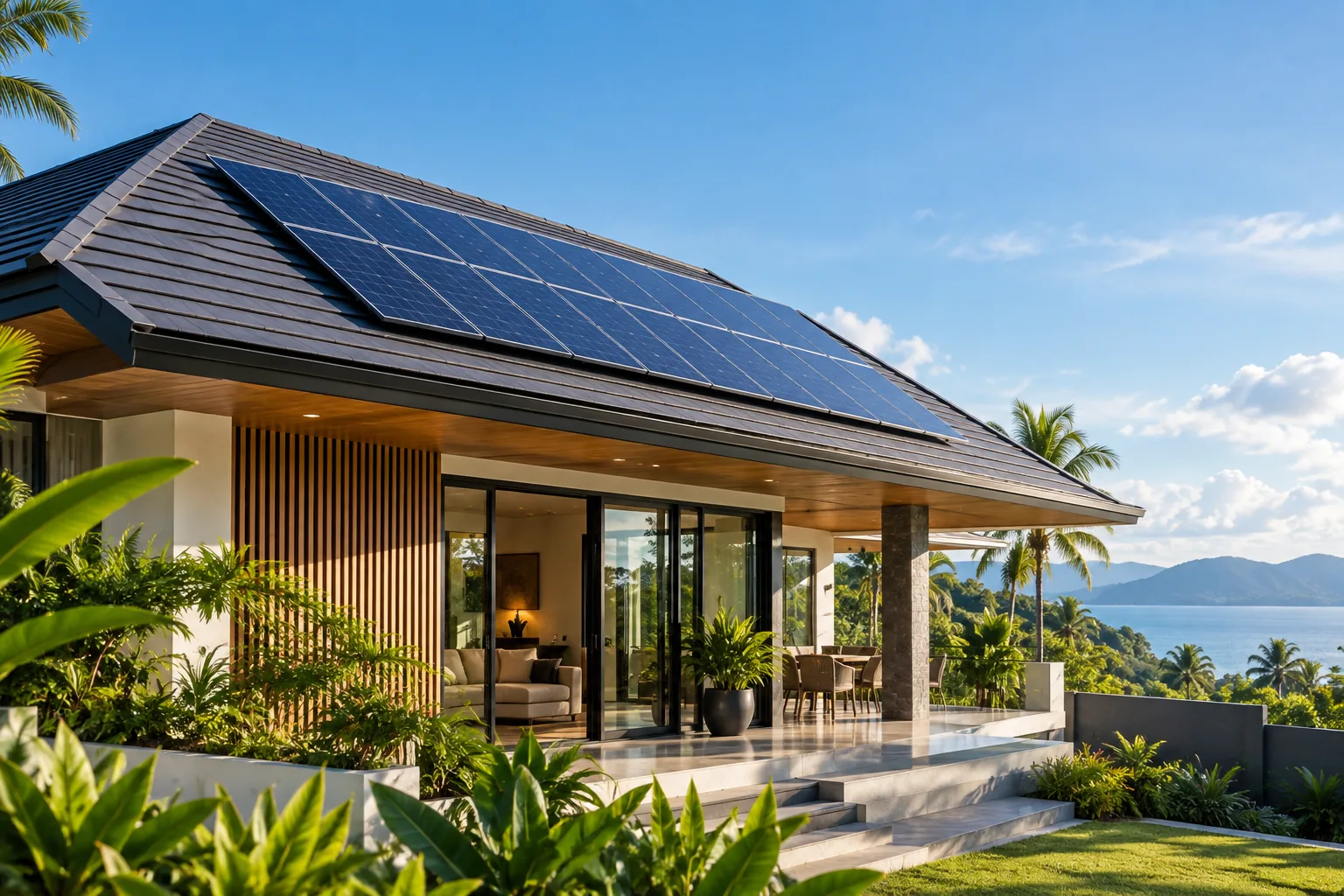
WHY CONSIDER RESIDENTIAL SOLAR
Generate energy
where you use it.
Solar PV can turn suitable roof or site space into a source of electricity for a home. What it can contribute depends on the property and the way the household uses energy.
Potentially reduce reliance on grid-supplied electricity where appropriate.
Plan household energy needs over the longer term.
Consider future storage or EV charging as needs change.
IS YOUR HOME SUITABLE?
Every home is different.
Solar suitability takes more than a roof. A useful assessment considers the whole property.
01
Roof & available area
Usable space, roof condition and structure influence where panels may be placed.
02
Orientation & shading
Sun exposure and nearby shade affect the generation a site can support.
03
Electrical setup
The existing electrical system needs to be considered as part of integration.
04
Electricity use
When and how much electricity a household uses informs system planning.
05
Site access
Safe, practical access matters for assessment, installation and future care.
06
Future needs
Storage, EV charging or changing household demand may influence the design.
UNDERSTANDING YOUR ENERGY USE
Start with how your
home uses energy.
Recent electricity use gives context for system planning. A bill or usage record can help show the scale of household demand, while a conversation can reveal when that energy is needed and whether needs may change.
CONSULTATION GUIDANCE
Have a recent electricity bill ready
A recent bill or usage record can provide useful context during consultation. Document upload is not currently available through this page.
HOW RESIDENTIAL SOLAR WORKS
From sunlight to
your home.
Solar PV converts sunlight into electricity. The exact connection and operation depend on the system design.
- 01
Sunlight
Light reaches the panels.
- 02
Solar Panels
Panels generate DC electricity.
- 03
Inverter
An inverter makes it usable by compatible home loads.
- 04
Home
The home can use generated electricity.
- 05
Grid / Energy Use
The wider electrical connection depends on system design and applicable requirements.
Optional: Battery Storage
A battery can be considered as a connected part of the system when household requirements support it.
SOLAR + ENERGY STORAGE
Solar generation.
Storage when it
makes sense.
A battery is a design choice, not a requirement for every home.
Storage may allow some generated energy to be kept for later use. Planning solar and storage together means considering household demand, electrical configuration and the role the battery should play in the wider system.
Explore energy storageTHE RESIDENTIAL SOLAR JOURNEY
From first conversation
to handover.
A clear sequence helps turn household needs into a defined system proposal and installation.
- 01Consultation
- 02Review Electricity Use
- 03Site Assessment
- 04System Design
- 05Proposal
- 06Installation
- 07Testing & Commissioning
- 08Handover & Support
WHAT WE CONSIDER
A system shaped by
the whole picture.
Good residential planning connects the site, household demand and installation requirements before equipment is selected.
01Site conditions
02Available installation area
03Electricity-use profile
04Electrical configuration
05Equipment suitability
06Installation practicality
07Future energy needs
CONNECTED RESIDENTIAL CAPABILITIES
More than panels,
when you need it.
Supporting capabilities can be considered where they are relevant to the household and system plan.
Energy Storage
Consider storage alongside generation when household needs call for it.
Explore energy storageEV Charging
Plan for charging requirements as part of the wider electrical picture.
Electrical Solutions
Consider the electrical equipment and integration needed for the system.
Operations & Maintenance
Keep inspection, maintenance and system care in view after handover.
RESIDENTIAL SOLAR FAQS
Questions worth
asking early.
Useful starting points before a site-specific assessment.
01How do I know if my home is suitable for solar?
A site assessment can review available roof or site space, shading, roof condition, electrical setup and installation access. Electricity use also helps determine what is appropriate.
02How is a residential solar system sized?
System design considers your household electricity use, usable installation area, site conditions and electrical configuration. A proposal should follow a site-specific review.
03Do I need a battery?
A battery is optional. Whether it makes sense depends on how your household uses energy, what you want the system to do and the proposed design.
04What should I prepare before a consultation?
Your property location, recent electricity bills or usage information, and your energy priorities are helpful starting points. A site visit may be needed for a fuller assessment.
05What happens after installation?
The system is tested and commissioned, then handed over with an explanation of its operation and next steps. Ongoing inspection and maintenance can be considered as part of system care.
LET’S START A CONVERSATION
Thinking about solar
for your home?
Start with your property, electricity use and what you want
your energy system to achieve.